The article was first published on TurkishNY Radio.
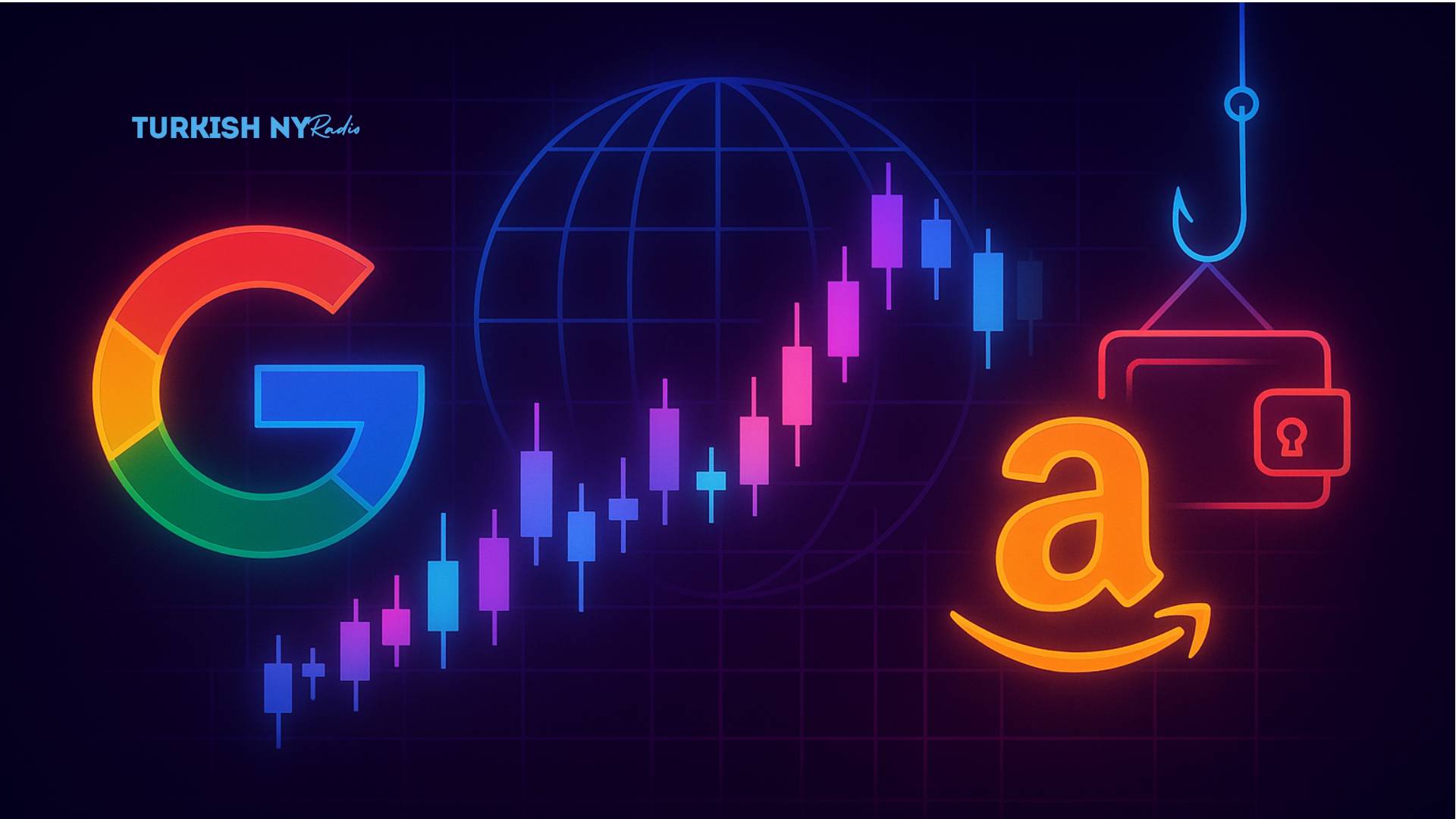
Two of the most closely watched companies in global equity markets now appear on crypto trading dashboards. A large decentralized derivatives venue has listed perpetual futures linked to Google and Amazon stock, so traders can build long or short positions with on chain collateral instead of a brokerage account.


The move pushes blue chip equities deeper into permissionless finance at the same time that security risks around fake trading apps grow louder.
The contracts are powered by a specialist trading layer focused on stock backed markets. That infrastructure already supports perpetuals tied to other major technology names, which turns the platform into an informal tech basket that trades twenty four hours a day.
For investors who operate mainly in DeFi, it opens a way to react to earnings, macro data, and big tech sentiment without touching a traditional stock exchange.
How The New Perpetuals Work
These instruments are perpetual futures, not tokenized shares. Each contract tracks the underlying stock price and uses a funding rate mechanism so the derivative stays close to that benchmark.
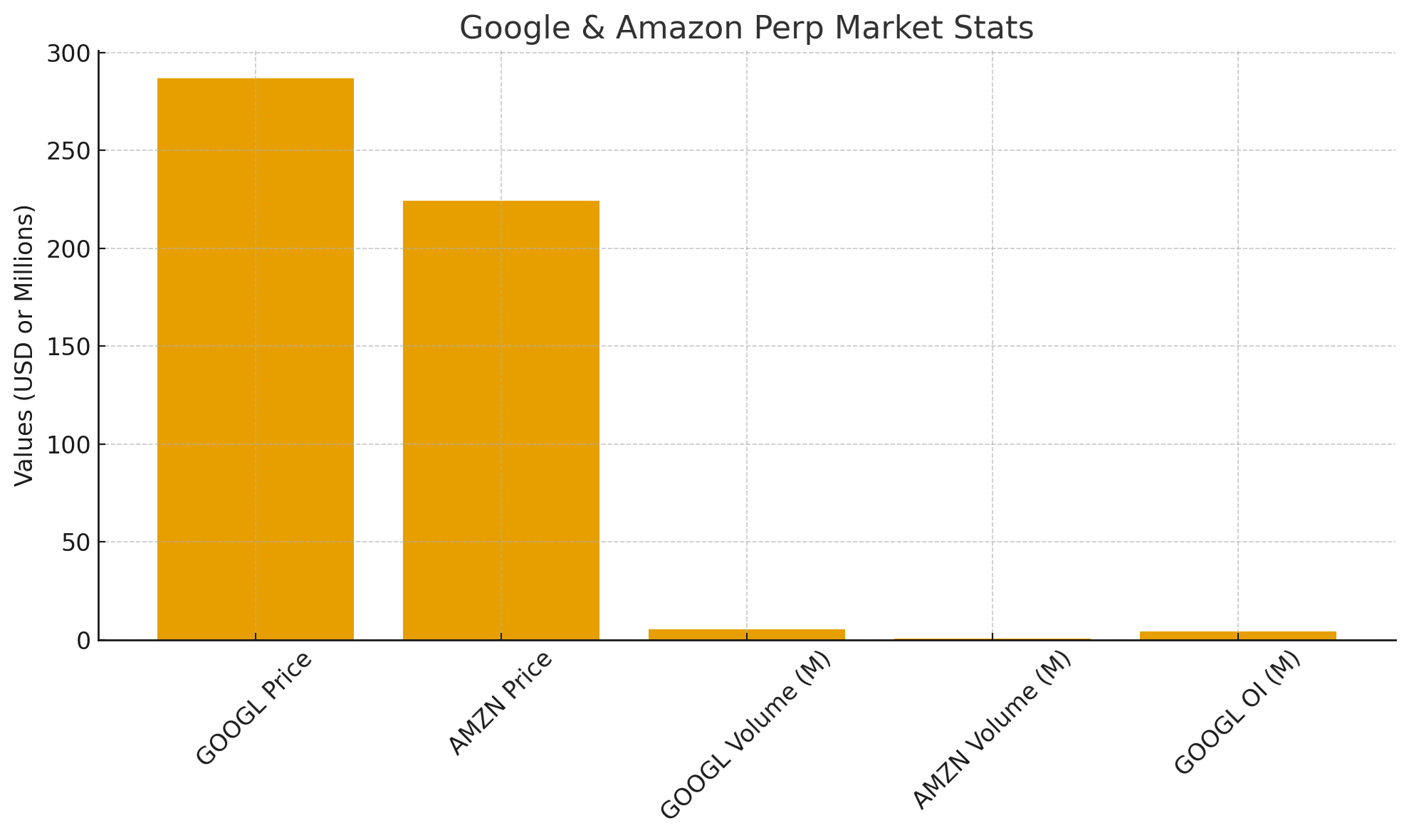
Public market data shows the Google perpetual recently trading around 286.78 dollars, with more than 5.25 million dollars in daily volume and over 4.16 million dollars in open interest. The Amazon market has traded near 224.21 dollars with roughly 528,000 dollars in volume over the same period.
Trading does not pause. The markets run around the clock and currently allow leverage of up to ten times. A relatively small margin deposit can control a much larger position. That structure can turn a modest price swing into a strong profit, but it can also trigger fast liquidations when volatility turns against the trade.
Trade.xyz, HYPE And HIP 3 Tickers
At the deployment layer sits Trade.xyz, which has been acquiring HIP 3 ticker rights for several household names. Recent purchases include the AAPL ticker for 500 HYPE tokens and the MSFT ticker for 527.83 HYPE. Control of those on chain tickers allows the team to launch and manage markets that sit under each symbol.
The HIP 3 framework requires market creators to lock meaningful amounts of HYPE as a security bond. That requirement raises the cost of low-quality listings and ties deployers directly to the long-term health of the products they introduce.
In practice, ticker rights act like small digital franchises on top of the core derivatives engine. The base protocol can scale to many markets, while individual deployers handle curation, liquidity relationships, and user communication.
Fake Apps Turn Progress Into A Warning
The growth story has a troubling parallel on the user security side. The same brand that now powers sophisticated stock perpetuals has also been cloned by scammers in major mobile stores. Earlier in the month, investigators uncovered a fake trading application that copied the genuine interface and urged users to type wallet recovery phrases into a login field.
A separate incident on another platform reportedly led to losses of about 28,000 dollars after victims downloaded a fraudulent app, linked wallets, and watched funds vanish. These cases show that even when smart contracts are audited and matching engines run as intended, the weakest link often remains the person who installs the wrong program or trusts the wrong screen.
What It Means For Crypto Traders
The arrival of Google and Amazon perpetuals deepens the connection between digital assets and traditional finance. Correlations between Bitcoin, Ether, and big tech can now be tracked inside a single derivatives stack, which helps professional desks hedge portfolios and allows smaller traders to move capital between coins and stocks through one interface.
At the same time, the listing reinforces a simple rule. High quality products do not remove the need for basic operational security. Users who verify every download, confirm they are using official links, and refuse to type recovery phrases into mobile apps stand a better chance of enjoying the upside of these new markets without becoming the next scam statistic. T
he combination of blue chip stock access and intense phishing pressure captures the current stage of crypto, where infrastructure has matured but user education still decides who keeps their gains.
Frequently Asked Questions
What are stock perpetuals in crypto?
Stock perpetuals are derivative contracts that mirror the price of an equity such as Google or Amazon without delivering real shares. They trade continuously and usually settle in stablecoins or other digital assets instead of national currencies.
How does leverage change the risk profile of these markets?
Leverage allows a trader to control a larger position than the value of posted collateral. With ten times leverage, a ten percent adverse move can wipe out the margin and trigger liquidation, so position size, stop levels, and funding costs must be managed carefully.
Why are fake trading apps such a serious threat for DeFi users?
Fake applications are built to harvest private keys or recovery phrases. Once attackers have those details, they can move every asset out of the wallet, and there is no central authority that can reverse the transfers or restore the funds.
Glossary Of Key Terms
Perpetual futures
Open ended futures contracts with no expiry date. They rely on periodic funding payments between long and short positions to keep prices aligned with spot markets.
Open interest
The total value of outstanding derivative contracts in a market. Rising open interest can signal growing participation and stronger conviction among traders.


Funding rate
A recurring payment that flows between longs and shorts on a perpetual contract. Positive funding usually means longs pay shorts, while negative funding means shorts pay longs.
HYPE token
The native asset used inside the Hyperliquid ecosystem. It is required to purchase HIP 3 ticker rights and to provide security stakes for new market deployments.
Source