
This article was first published on TurkishNY Radio.
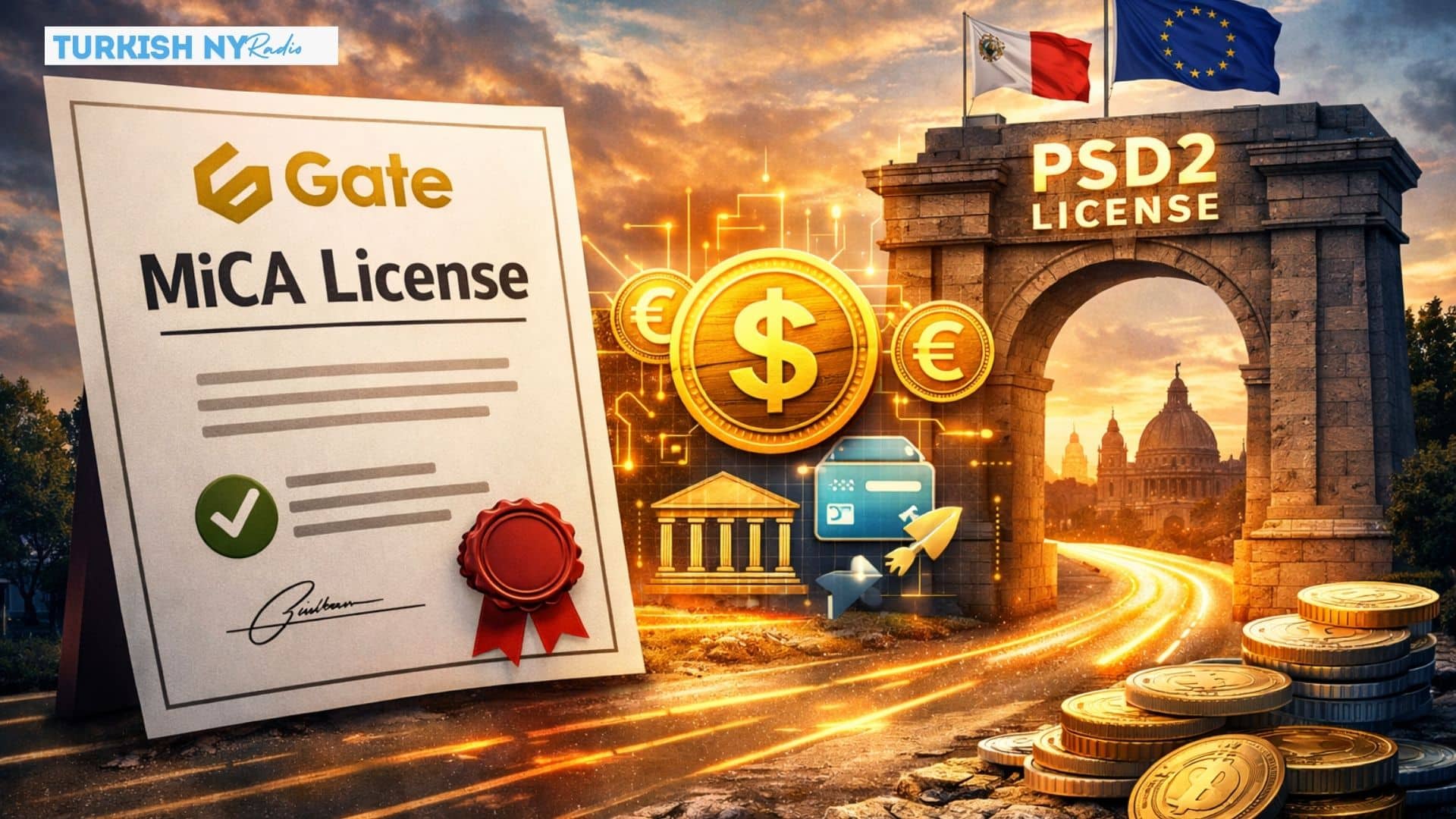
The Gate MiCA license is swiftly becoming one of the most significant regulatory milestones in Europe’s cryptocurrency business this year. Gate has grown its administrative presence with a PSD2 payment organization license in Malta, following its permission under the European Union’s Markets in Cryptoassets framework.


These approvals allow financial institutions to provide approved stablecoin and exchange currencies within the European Union (EU).


For European clients, this transition may result in speedier euro transactions, consistent stablecoin acceptance and increased safety for customers under a single regulatory environment.
Gate MiCA License Anchors EU Expansion Strategy
The Gate MiCA license enables the exchange to operate within the EU’s standardized crypto regulatory framework, known as the Trading in Crypto-Assets Agreement. MiCA sets clear guidelines for cryptocurrency exchanges. Its administrators and stablecoin issuers in every member country.
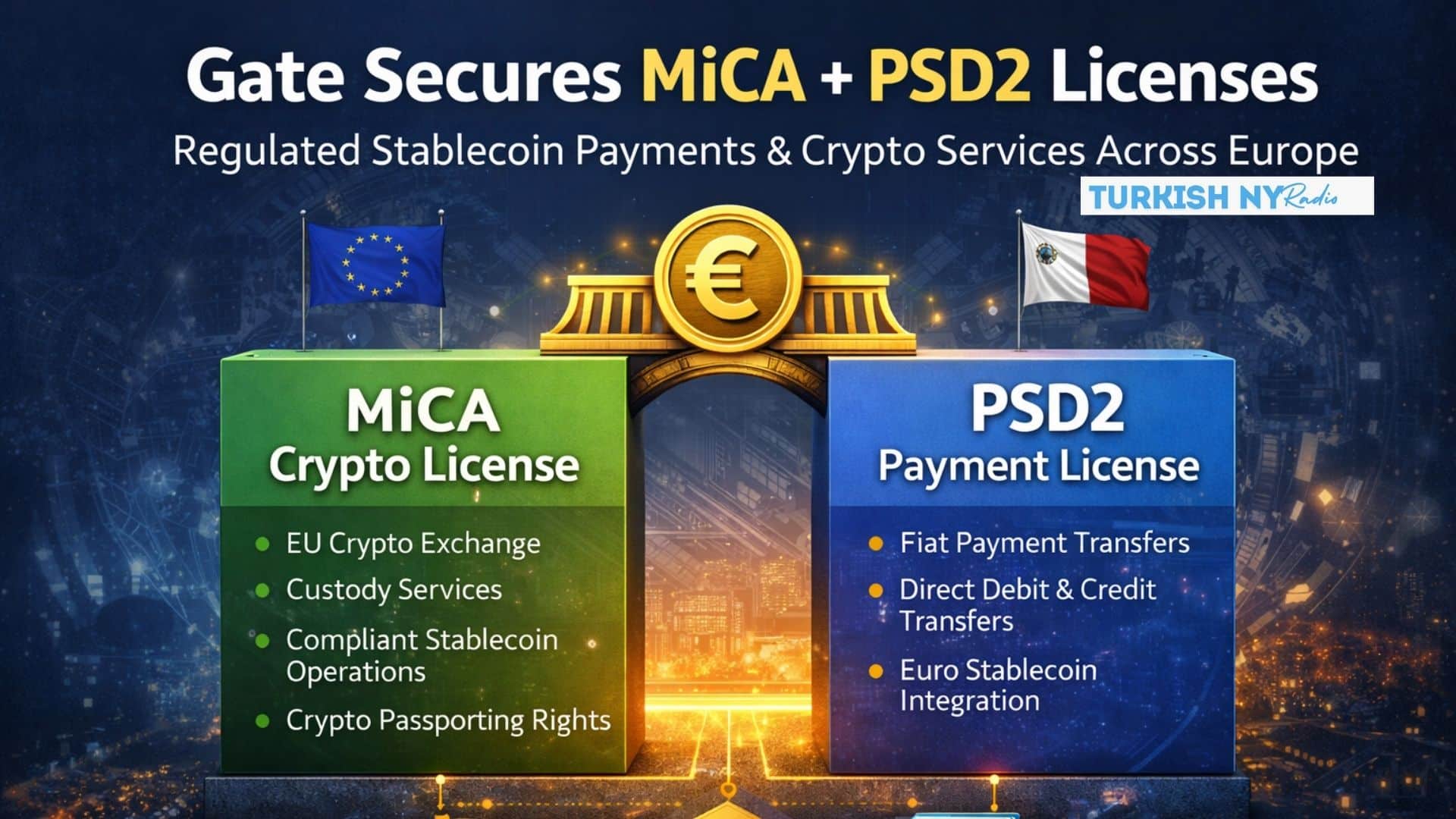
The Gate MiCA license allows the platform to lawfully provide exchange and storage facilities within the European Economic Area via passing privileges. This means Gate does not need separate approvals in every EU country once authorized in one jurisdiction.
A company spokesperson stated that regulatory clarity under MiCA provides “a stable foundation for long-term innovation in digital asset payments.”
Malta PSD2 Approval Complements Gate MiCA License
Gate’s Malta-based entity also secured authorization under Revised Payment Services Directive (PSD2) from the Malta Financial Services Authority.
While the Gate MiCA license governs crypto-related services, PSD2 covers electronic money transfers, direct debits, credit transfers, and other fiat payment operations. This dual-licensing structure allows the exchange to bridge traditional banking rails with blockchain-based assets.
The combination of PSD2 approval and the Gate MiCA license enables regulated euro on-ramps and off-ramps, potentially improving user confidence and transaction efficiency.
Stablecoins Under a Regulated Framework
Stablecoins have faced growing scrutiny in Europe, especially after MiCA introduced strict rules for asset-referenced tokens and e-money tokens. With the Gate MiCA license, the platform can integrate stablecoin services within the EU’s compliance standards.
MiCA requires transparency, capital reserves, and consumer protection safeguards for stablecoin operations. The Gate MiCA license ensures that any supported compliant stablecoin offerings align with these obligations.
Industry analysts note that exchanges operating under MiCA may gain a competitive advantage as regulatory uncertainty fades. “Firms that secure early authorization will likely capture institutional demand,” one regulatory consultant said.
Why This Matters for the European Market
The Gate MiCA license signals a broader shift in Europe’s crypto ecosystem. Instead of operating in fragmented national systems, companies can now function under a single rulebook.
For users, this could translate into:
-
Stronger legal protections
-
Transparent stablecoin operations
-
Regulated fiat-crypto conversions
-
Cross-border service access
By pairing PSD2 payments with the Gate MiCA license, Gate positions itself as a fully compliant gateway between Web3 infrastructure and Europe’s financial system.
Market observers believe that the Gate MiCA license may also encourage other exchanges to accelerate their compliance efforts under MiCA before enforcement tightens further in 2026.
Conclusion
The Gate MiCA license symbolizes more than just regulatory clearance; it is a significant step toward long-term institutional credibility in Europe. With PSD2 license, Gate may now operate at the crossroads of trading digital currencies, stablecoins, and government-regulated payment services.
As Europe moves forward with full digital asset monitoring, companies that align proactively with MiCA rules may determine the probable future of sustainable crypto banking on the European mainland.
Summary
The Gate MiCA license boosts the exchange’s popularity throughout Europe by allowing it to provide legitimate crypto and stablecoin transactions under EU legislation. When combined with a PSD2 authorization to pay from the Malta authorities, Gate may link euro exchanges with authorized online asset infrastructure.
This dual approval increases customer privacy, enables worldwide development, and establishes Gate as an acknowledged connection between conventional banking and bitcoin payments in the European Union.
Glossary of Key Terms
MiCA (Markets in Crypto-Assets Regulation): Is an international framework that regulates digital currency assets and providers of services.
PSD2 (Revised Payment Services Directive): Is an EU legislation that governs payment via the web networks.
Stablecoin: A digitized documentation having a set value that is typically linked to a coin.
Passporting Rights: Being able for financial services companies to carry out business across EU nations with a single license.
On-Ramp/Off-Ramp: Mechanism for converting fiat cash to digital currency.
FAQs for Gate MiCA license
1. What does the Gate MiCA license allow?
It permits Gate to offer crypto exchange and custody services across the EU under a unified regulatory framework.
2. Why is PSD2 important alongside MiCA?
PSD2 covers fiat payment services, enabling regulated euro transfers in addition to crypto operations.
3. Does this impact stablecoin users?
Yes. Stablecoin providers must now follow MiCA’s rigorous accountability and reserve requirements.
4. Can Gate operate across all EU countries?
Yes, through passporting rights once authorized in a member state.
5. Why is this significant for Europe’s crypto market?
It signals a shift toward fully regulated digital asset platforms integrated with traditional financial systems.