Digital asset treasuries are also transforming at a very fast pace, no longer performing their previous crypto-vault service. According to the industry experts, the next step will entail more sophisticated and diverse holdings.
In the future, there is likely to be tokenized real-world assets, stablecoins, and yield-generating instruments added to treasuries. This transformation has implications for greater incorporation between conventional finance and decentralized systems.


Digital Asset Treasuries Transform into Active Financial Networks
Treasuries are no longer just seen as passive storage systems. Organizations are starting to leverage blockchain infrastructure to build active financial ecologies that can lend, stake, restake and tokenize capital.
The executives of blockchain believe that making digital asset treasuries into a productive network is the idea to be achieved and one that creates value constantly. This development is representative of a larger trend of integrating old financial approaches with DeFi.
Institutional Adoption of Digital Asset Treasuries Accelerates
Institutional adoption of digital asset treasuries has grown significantly in 2025. A recent report by Bitwise Asset Management documented 48 new corporate initiatives where firms added Bitcoin and Ethereum to their balance sheets.
Also Read: How Ripple’s Middle East Push Positions XRP for Institutional Adoption
Experts believe that the increased transparency and auditability of blockchain systems are driving this growth. Many corporations now view digital asset treasuries as reliable, compliant, and auditable tools for managing modern balance sheets.

From Storage to Strategic Allocation
Sandro Gonzalez, co-founder of the Cardano-based project KWARXS, highlighted a major shift in how digital assets are managed. He noted that digital asset treasuries are evolving from simple storage mechanisms into strategic allocation systems.
Projects like KWARXS are already linking tokenized infrastructure, such as renewable energy production, to blockchain networks. This approach aims to align treasury operations with real-world value creation and sustainability goals.
Expanding the Range of Treasury Assets
The range of assets available for inclusion in digital asset treasuries continues to expand as tokenization technology advances. Executives believe the next generation of treasuries will include tokenized stocks, real estate, and commodities in addition to cryptocurrencies.
Tokenized gold and equities offer the same exposure as traditional instruments but with improved liquidity. Some companies are also exploring illiquid digital assets such as NFTs and real estate-backed tokens to diversify their holdings and maximize yield potential.
Tokenized Securities and Stablecoin Integration
Analysts predict that digital asset treasuries will increasingly include cash-equivalent instruments such as stablecoins, tokenized U.S. Treasurys, and digital money market funds. These on-chain instruments combine the security of traditional finance.
Over time, more complex securities such as corporate bonds and tokenized assets are expected to migrate to DeFi. For unique or high-value assets like real estate, tokenization may allow fractional ownership through non-fungible tokens.
Corporate Experimentation and Market Behavior
Companies are already experimenting with diverse forms of digital asset treasuries. GameSquare Holdings, a digital media firm, made headlines when it purchased a multimillion-dollar NFT alongside Ether as part of its strategic investment portfolio.
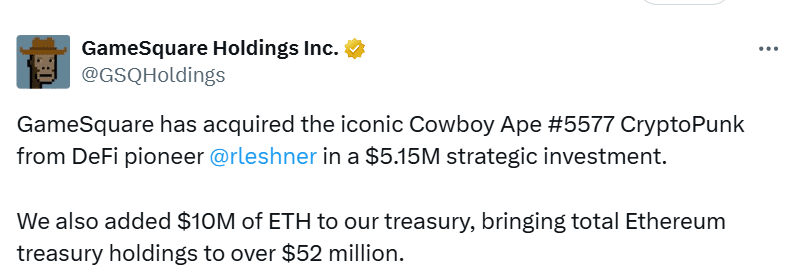
The move reflects growing confidence in blockchain-based assets as long-term stores of value. Analysts believe that the assets chosen for future treasuries will depend heavily on legislation, corporate risk appetite, and evolving accounting standards.
Challenges and Compliance Considerations
While the evolution of digital asset treasuries presents major opportunities, experts caution that compliance and fiduciary responsibility remain crucial. Traditional assets such as Bitcoin and Ethereum are relatively straightforward for auditors to assess,
Accounting frameworks are still developing methods to evaluate these holdings consistently. Companies must also ensure that their treasuries maintain sufficient liquidity to meet obligations and withstand market volatility.
The analysts project that tokenized real-world assets, in the long term, including bonds, commodities, and infrastructure-linked projects, will take the lead in crypto treasuries. These tools present inherent utility returns and are appealing substitutes to crypto holdings.
The tokenization of assets will become part of the financial system of organizations as the regulation of blockchains matures to enhance efficiency and transparency. DA treasuries: DA treasuries are set to fill the space between decentralized finance and conventional markets.
Conclusion
Digital asset treasuries are being converted from passive cryptocurrency storage into active yield-generating financial systems. In another step in blockchain-based finance, the use of tokenized assets, stablecoins, and real-world instruments is the next step.


With the institutions gradually shifting to these models, the digital asset treasuries will become vital in capital management, compliance, and innovation in the decentralized economy.
Also Read: Ripple Backs Gemini IPO Filing with $75M Credit Line, Stablecoin Included
Appendix: Glossary of Key Terms
Digital Asset Treasuries – Blockchain-based systems for managing and allocating tokenized assets and cryptocurrencies.
Tokenized Assets – Real-world assets represented digitally on blockchain networks.
Stablecoins – Cryptocurrencies pegged to fiat currencies for price stability.
On-Chain Securities – Financial instruments issued and traded directly on blockchain platforms.
Decentralized Finance (DeFi) – A blockchain-based financial ecosystem without intermediaries.
Real-World Assets (RWAs) – Physical or traditional assets linked to blockchain tokens.
Staking and Restaking – Processes of locking digital assets to earn rewards or secure networks.
Auditability – The ability to track and verify transactions transparently on the blockchain.
Tokenization – Converting real-world value into digital tokens on a blockchain.
Frequently Asked Questions About Digital Asset Treasuries
1. What are digital asset treasuries?
Digital asset treasuries are blockchain-based financial systems that allow institutions to store, manage, and allocate cryptocurrencies and tokenized assets securely.
2. How are digital asset treasuries changing?
They are evolving from passive crypto storage to active, yield-generating systems that include tokenized assets, stablecoins, and on-chain securities.
3. What types of assets can be included?
Treasuries may include cryptocurrencies, stablecoins, tokenized bonds, real estate, gold, and other real-world assets represented digitally.
4. Why are corporations adopting digital asset treasuries?
They offer transparency, liquidity, and real-time auditability while integrating decentralized finance tools into traditional treasury management.