![Sun [New]](https://s2.coinmarketcap.com/static/img/coins/64x64/10529.png)


![BitTorrent [New]](https://s2.coinmarketcap.com/static/img/coins/64x64/16086.png)


Institutional capital was briskly back on the table for crypto ETFs at the start of the week. Institutional investors started to gain exposure to digital assets via regulated products.
Funds dedicated to Bitcoin and Ethereum accounted for most of the inflows. This trend indicates increasing confidence after some market turbulence.


As such, crypto ETFs remain the most significant bridge between traditional finance and digital assets in the eyes of market participants. This recent inflow indicates that institutional demand is returning. But beneath the surface, analysts still see mixed signals.
Crypto ETFs See $592M Inflows as Institutional Demand Returns
Crypto ETFs recorded nearly $592 million in combined inflows on Monday. Bitcoin funds accounted for the largest share. Ethereum funds followed with strong gains. Solana products added only a small amount.
The inflow session was clean. No major outflows were reported. This indicates coordinated buying activity across multiple funds. Such patterns often reflect renewed conviction among large investors.
It provides a simple way for institutions to access digital assets. They remove the need for direct custody. This makes them attractive for traditional investors.
The recent rise in the activity points to a short-term recovery. Still, broader market indicators remain weak. This creates a cautious outlook despite the strong inflows.
Bitcoin ETFs Lead the Market
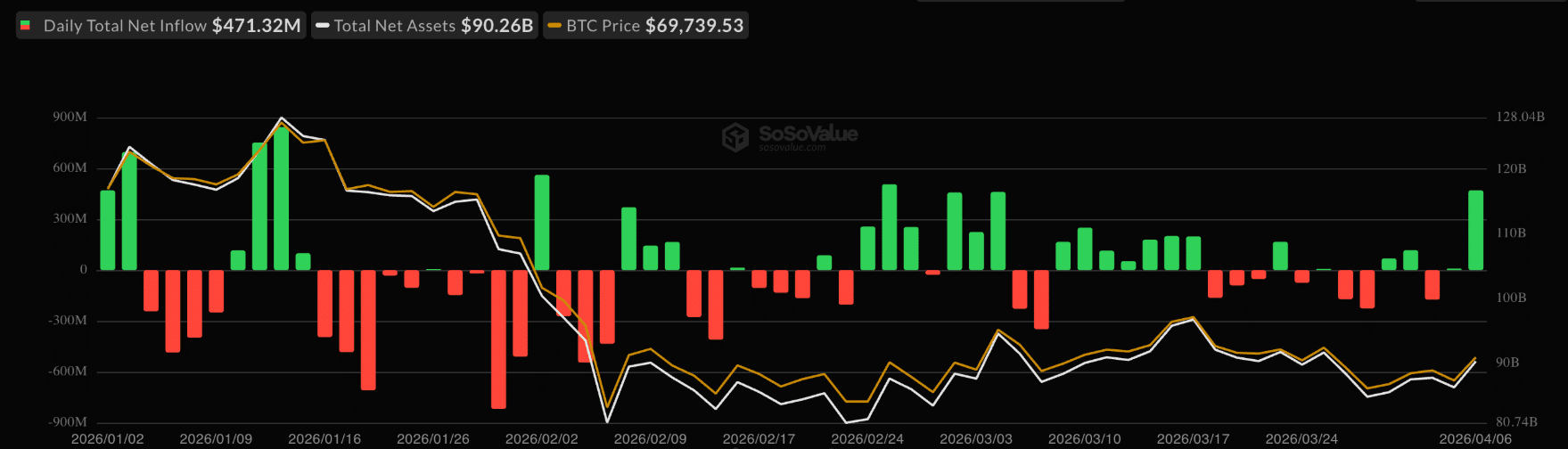
Bitcoin-focused ETFs brought in $471 million in net inflows. BlackRock’s iShares Bitcoin Trust led the gains. Fidelity’s Wise Origin Bitcoin Fund followed closely.
Other funds also posted steady inflows. There were no major withdrawals. This highlights strong institutional demand for Bitcoin exposure through ETFs.
Ethereum ETFs Show Recovery
Ethereum-based ETFs recorded $120 million in inflows. This marked a clear recovery after earlier weakness. All tracked funds posted positive flows.
Ethereum also showed strong price movement. The asset gained over 5% during the session. This reflects improved sentiment supported by ETFs demand.
Solana ETFs Lag Behind
Solana-focused ETFs added about $247,000 in inflows. The figure remained small compared to Bitcoin and Ethereum.
This shows that institutional investors still prefer major assets. ETFs tied to altcoins continue to see limited participation.
Prices React to ETF Activity
Market prices followed ETF inflows upward. Bitcoin hovered around $68,600 before surging towards $70,000. Ethereum climbed to around $2,110.
These actions highlight the power of ETFs over short-term factors. When the inflows are strong, buying pressure is generally created. That helps to support the prices of other assets in the market.
Institutional Demand Supports Stability
ETFs play a key role in market stability. They provide a steady flow of capital from traditional finance. This helps reduce volatility during uncertain periods.
Institutional investors often use ETFs as their main entry point. As a result, crypto ETFs have become a major driver of sentiment.
On-Chain Data Shows Weakness
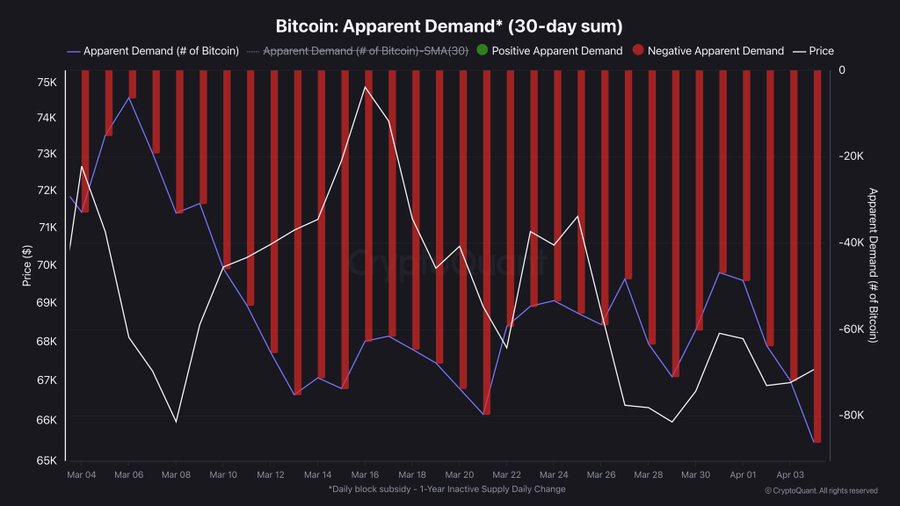
Despite strong inflows, on-chain data tells a different story. Data from CryptoQuant shows falling demand. Thirty-day apparent demand dropped to about negative 87,600 BTC. This signals weaker network activity. It contrasts with the strength seen in ETFs.
Large Bitcoin holders have started to reduce their positions. Wallets holding 1,000 to 10,000 BTC moved into net selling.
This marks a major shift from earlier accumulation trends. It suggests caution among large market participants. This behavior contrasts with inflows into ETFs.
Analysts Highlight Mixed Signals
The market remains dicey, analysts warn. Analyst Dark said demand is still weakening. Bitcoin continues to trade in a tight range.
A breakout could be hard with weaker fundamentals. ETFs could prop prices in the short term. But longer-term direction depends on general demand.


Conclusion
Institutional money is coming back and so are crypto ETFs. Recovery of Bitcoin and Ethereum funds That helps support prices and lifts sentiment.
However, underlying data remains weak. The gap between ETF inflows and on-chain demand creates uncertainty. The future of ETFs will depend on whether both trends align.
Appendix: Glossary of Key Terms
Spot ETF: A fund that acquires the underlying asset itself, not derivatives.
Net Inflows: The sum of the overall money into a fund less the outflow.
Digital Assets: Cryptocurrencies and tokens on the blockchain are purportedly used for value.
On-Chain Data: Statistics that show real activity and transactions occurring across the blockchain.
Distribution Phase: The phase of the market where previous large holders begin selling off after gaining some.
Frequently Asked Questions About Crypto ETFs
1- What are crypto ETFs?
Crypto ETFs are exchange-traded funds that follow digital assets such as Bitcoin and Ethereum. They enable investors to get exposure without directly holding crypto.
2- Why are ETFs important?
This offers a regulated method for institutions to gain exposure into digital assets. Such approaches can enhance market participation and liquidity.
3- Which ETFs saw the most inflows?
Bitcoin ETFs recorded the highest inflows. Ethereum ETFs followed with strong gains. Solana ETFs remained much smaller.
4- Do ETFs affect prices?
Yes. Strong inflows into ETFs often support price increases by creating additional demand.