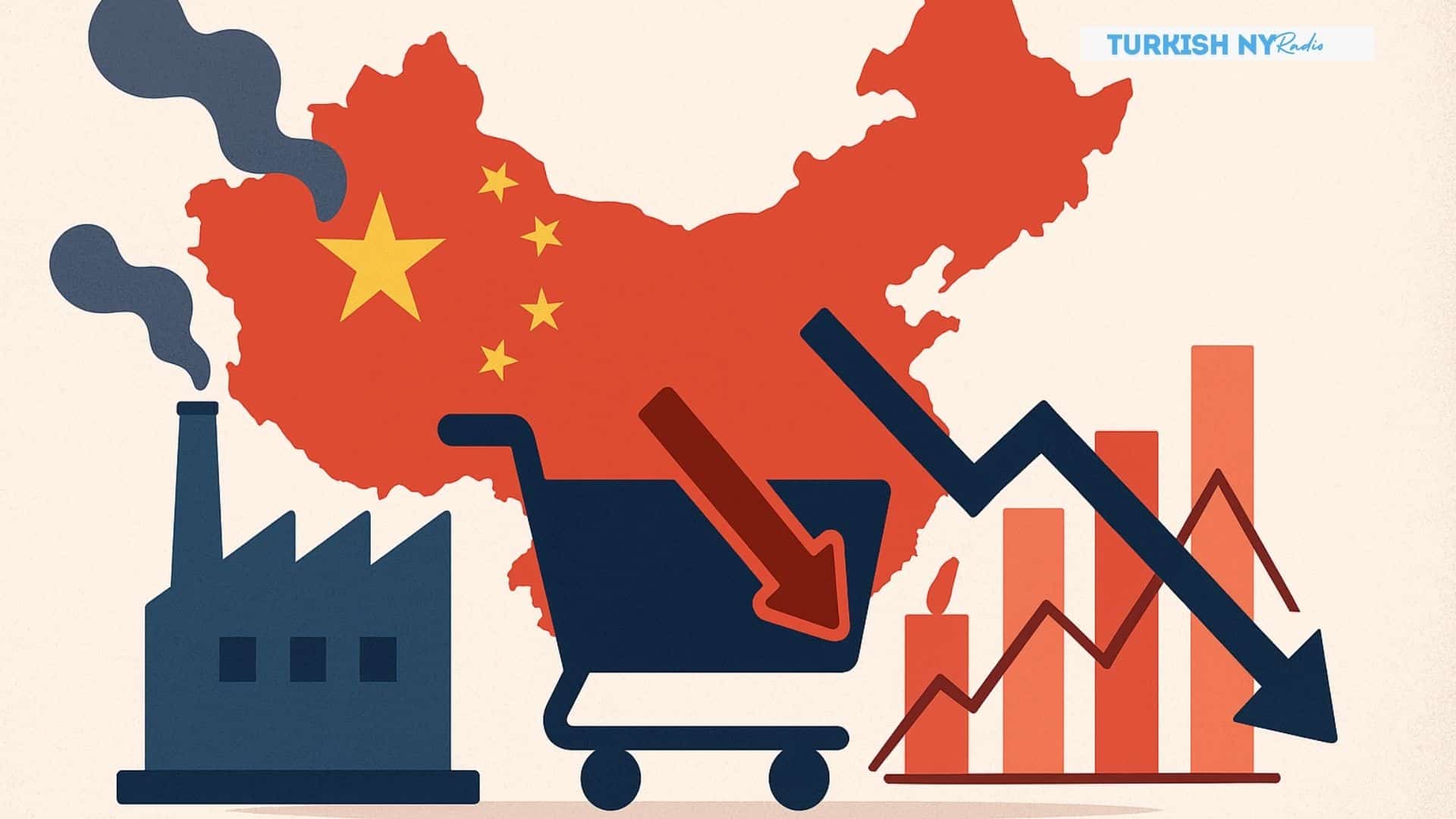
China’s most recent release of economic data has sparked concern in markets around the world, another episode in what analysts are increasingly calling a relentless China economic slowdown.
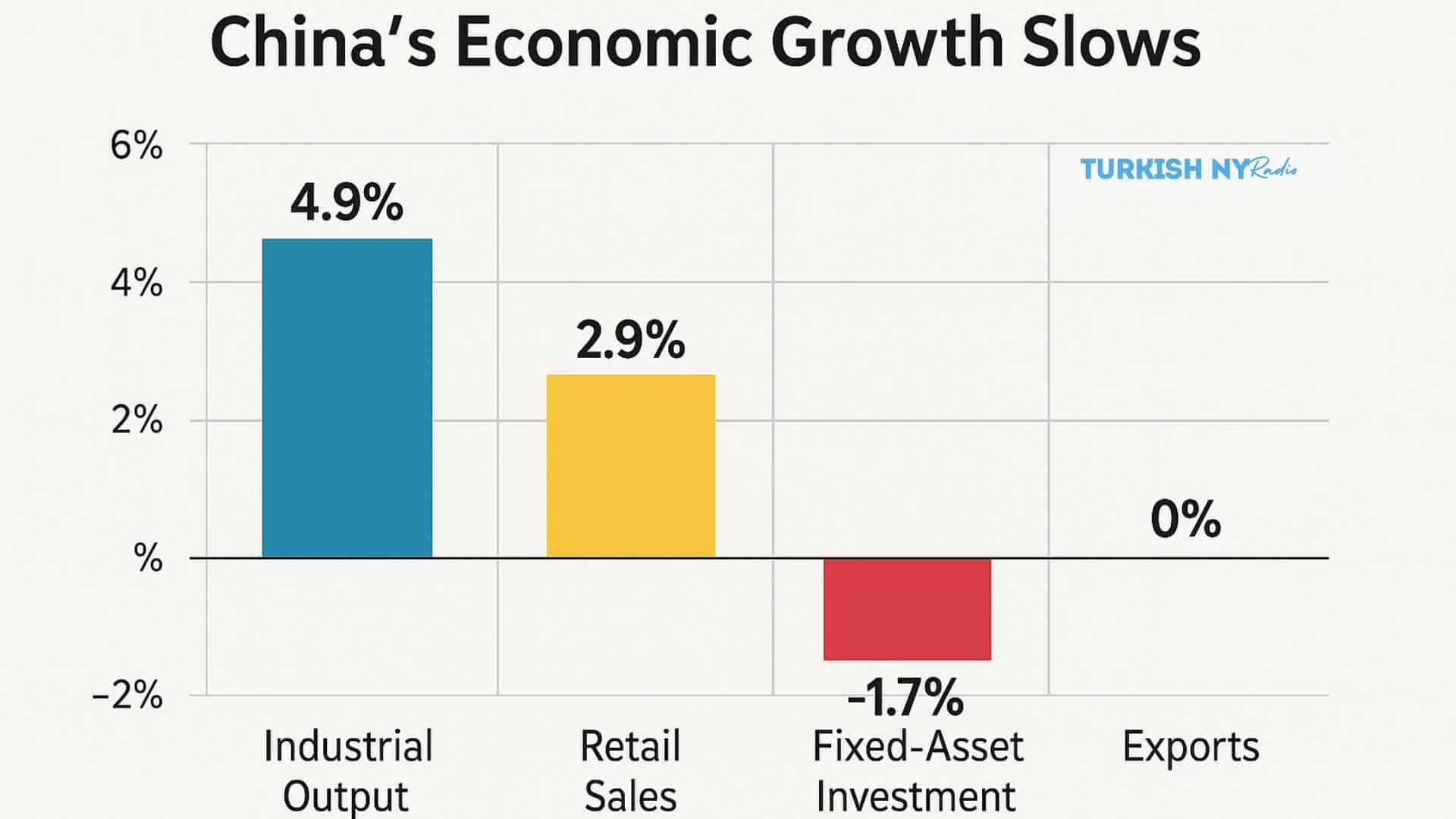
Factory production expanded at its slowest pace in more than a year, and retail activity, generally considered a reliable measure of household confidence, also slackened. For a country accustomed to rapid growth and quick, strong recoveries, the blunting of momentum is increasingly hard to overlook.


Industrial and Consumer Activity Slow down
Suppliers in the country reported weaker demand last month, and some plants ran below capacity for the first time in months. The numbers aren’t disastrous, but they suggest an economy that is finding it difficult to get on its feet. A lot of businesses say new orders from overseas have cooled as tensions in the global economy and uncertain outlooks prompt buyers to retrench.
And, meanwhile, retail spending, an area over which China was counting to buoy up growth as exports faltered, likewise.
Also read: US-China Trade Deal Sparks Global Market Rally as Bitcoin Eyes $120K
“People are worried about the future, and you can feel that hesitancy everywhere,” said a Shanghai-based market analyst. “Shoppers are being cautious, and factories are responding to weaker confidence.”
Several multinational companies that rely heavily on Chinese demand are adjusting their expectations as well. From carmakers to luxury retailers, many firms now include the China economic slowdown in their risk assessments, recognizing that the environment is becoming more unpredictable than it was just a few years ago.
“Revenue from land sales by China’s local governments dropped 16% in 2024 compared with the previous year…”
Deep-Rooted Pressures Remain Hard to Shake
Behind the monthly data lies a broader set of challenges that continue to weigh heavily on the country’s outlook. China’s property market, traditionally a huge driver of household wealth, remains unstable. Developers are struggling with debt, unfinished projects linger, and potential buyers are adopting a “wait and see” approach.
Local governments, once powerful engines of infrastructure growth, are also facing tighter budgets. These financial strains limit their ability to support new projects, creating yet another layer of pressure on the wider economy.
“The global picture is complicated, and China is feeling that reality as much as anyone,” noted a European trade adviser.
With all these forces intersecting, the China economic slowdown has become a blend of cyclical cooling and deeper structural concerns that will likely take time to resolve.
A Cautious Policy Response as Pressures Build
The Chinese government has acknowledged the recent softness but has avoided large stimulus measures. Instead, Beijing has chosen targeted support, credit help for smaller firms, assistance for some local governments, and focused programs for industries such as electric vehicles and manufacturing upgrades.
This careful approach reflects worries about long-term financial health, yet it also means the China economic slowdown may persist unless consumer and business confidence picks up. Investors worldwide are watching closely for signs of stronger intervention or policy clarity.
For now, the message from officials remains consistent: stability first, sweeping action later, if it becomes necessary.


Conclusion
With factory activity cooling and shoppers becoming more cautious, the China economic slowdown is gaining traction in ways that are increasingly visible.
The path ahead will depend on how effectively China balances its short-term pressures with long-term reforms. For global markets and companies tied to Chinese demand, the coming months will be critical in showing whether the country can regain momentum or whether the slowdown becomes a defining trend.
Also read: China Consumer Lending 2025 Grows 7.6% to ¥5.4 Trillion as Regulation Softens
Glossary of Key Terms
Consumer confidence – How optimistic people feel about their financial future.
Industrial output – The value of goods produced by factories.
Fiscal pressure – Financial strain on government budgets.
Household spending – Money spent by families on goods and services.
Stimulus measures – Government actions that aim to boost economic activity.
FAQs for China Economic Slowdown
1. What is causing the China economic slowdown?
A mix of weaker consumer demand, slowing factory activity, property-sector stress, and global uncertainty.
2. Are businesses feeling the impact?
Yes. Both domestic and international companies are adjusting plans to account for softer demand.
3. How are consumers responding?
Many households are cutting back on non-essential spending due to cautious outlooks.
4. Is the government planning major stimulus?
Not yet. Beijing is choosing targeted measures instead of broad, sweeping action.
5. Could the slowdown continue?
Yes. Without stronger confidence or new policy moves, the China economic slowdown may stretch into next year.