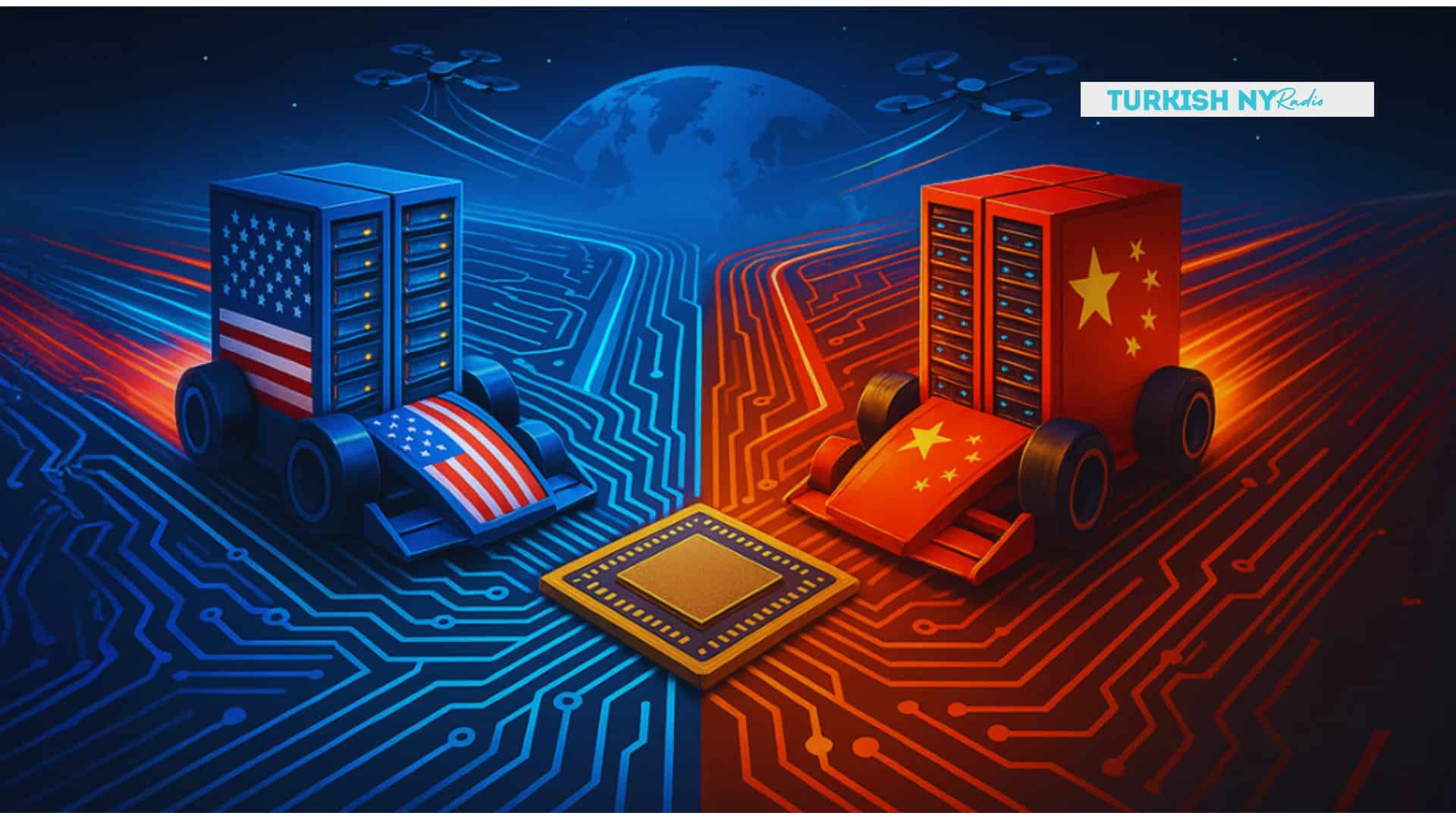
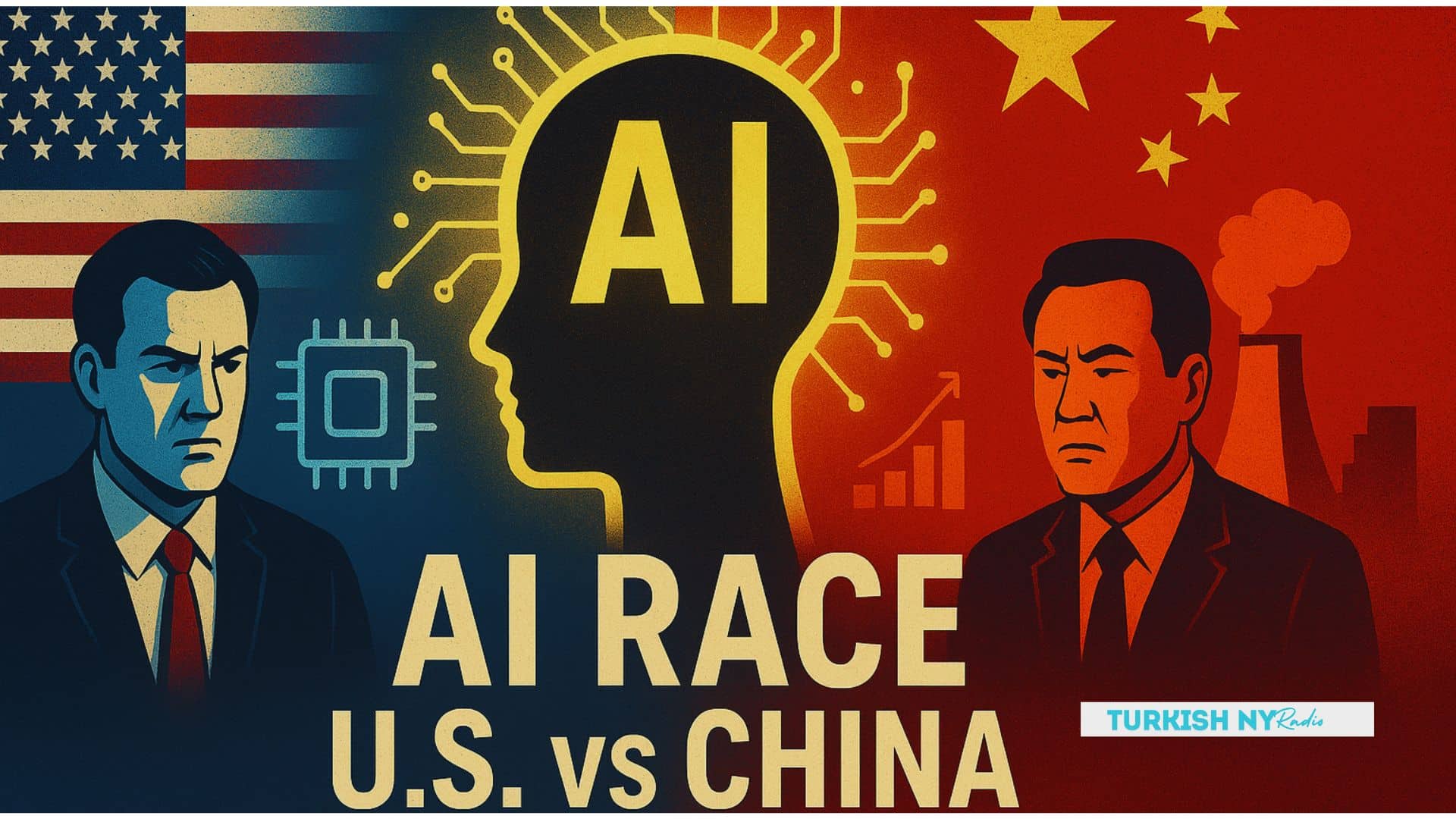
The AI race U.S. vs China has become one of the most pressing global competitions of our time. While both nations push forward with cutting-edge research and groundbreaking technologies, the real battleground may not only be in algorithms or chips but also in the energy that powers artificial intelligence.
As demand for AI continues to surge, the ability to generate affordable, clean, and stable energy could decide the outcome of this rivalry.


Energy: The Hidden Frontline in the AI Race U.S. vs China
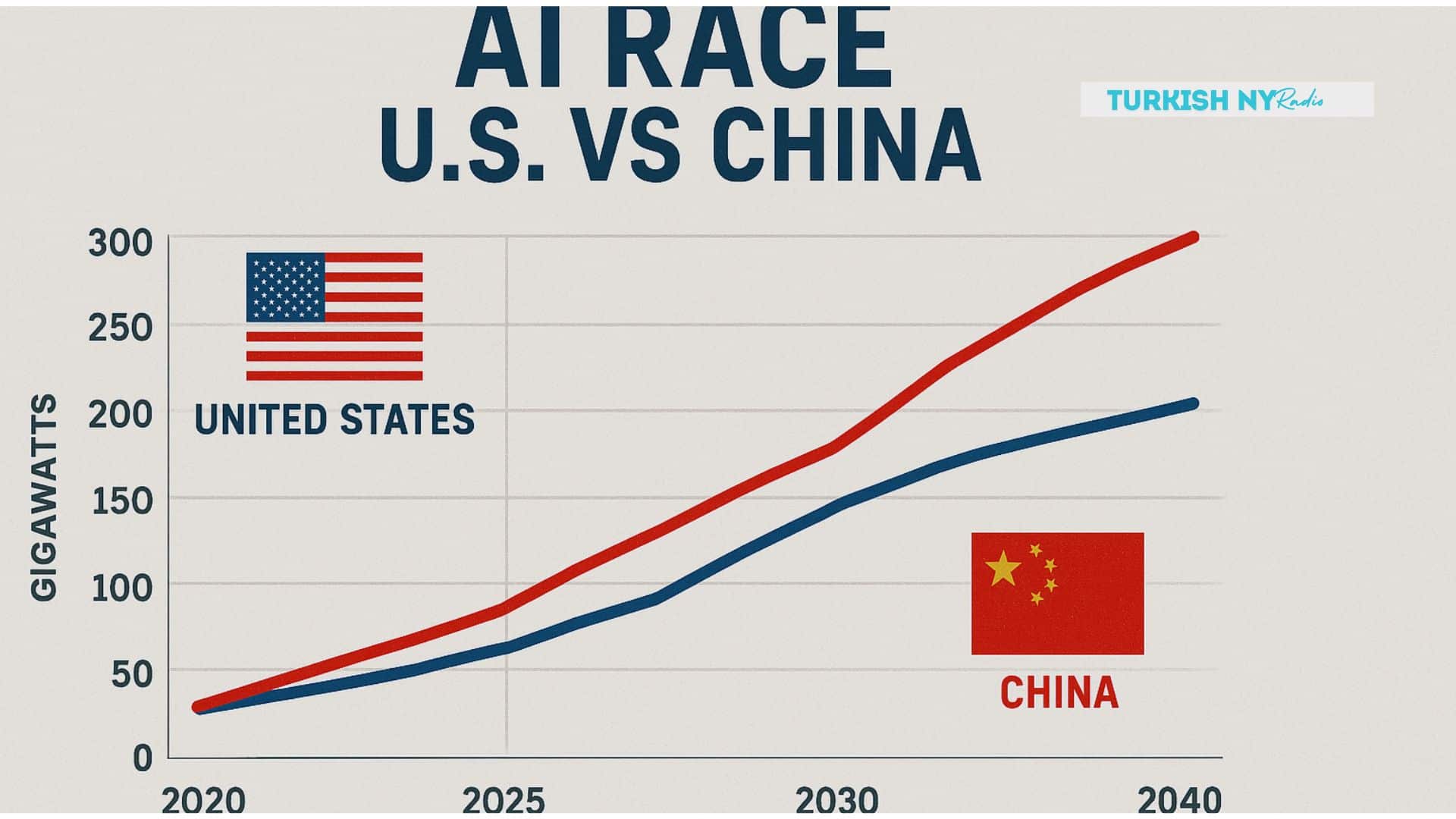
China is rapidly constructing nuclear power plants, with nearly 30 reactors under development. The country plans to reach 65 gigawatts of nuclear capacity by the end of 2025 and could exceed 200 gigawatts by 2040. This aggressive buildout supports the energy-intensive demands of AI data centers.
In contrast, the U.S. has struggled with delays and cost overruns in nuclear projects. After completing the Vogtle reactors in Georgia, it has no new large-scale reactors currently under construction. While companies such as Westinghouse are exploring modular designs, regulatory and financial hurdles remain.
“The US-China “AI race” is incorrectly framed. It’s not about algorithms or research papers – it’s a compute war.” formerly Twitter
AI’s Growing Appetite for Power
The AI race U.S. vs China is not just about who develops smarter models but also who can sustain them. Training large language models requires enormous electricity consumption. U.S. data-center demand could add up to 78 gigawatts by 2035, while global data centers already consumed over 415 terawatt-hours in 2024.
“AI is only as strong as the grid that supports it,” notes an energy analyst. This suggests that the country with a stronger, cleaner energy infrastructure could gain an edge in scaling artificial intelligence adoption.
America’s Strengths in AI Research and Hardware
Despite China’s energy lead, the AI race U.S. vs China is far from one-sided. The U.S. maintains dominance in AI research, semiconductor design, and venture capital funding. Companies like NVIDIA, OpenAI, and Google set benchmarks in generative AI and large-scale deployments.
Additionally, the U.S. is investing in renewable energy and small modular reactors that may help balance the energy gap in the long term. By combining innovation with efficiency, America could offset China’s nuclear advantage.
Quotes from Experts
-
“China’s ability to deploy nuclear capacity at scale is unmatched,” said a policy researcher.
-
“But the U.S. still leads in AI innovation and chip design, which remain critical advantages,” added a tech strategist.
These perspectives highlight that the AI race U.S. vs China is about more than just one factor, it is a multidimensional contest.


Conclusion
The AI race U.S. vs China is intensifying, with China advancing in energy infrastructure while the U.S. holds strong in innovation and research. The final outcome will depend on who can better align energy policy, regulatory frameworks, and technological breakthroughs. One thing is certain: the competition is not over, and the scoreboard continues to shift.
Also read: Deposit Flight Fears Explode as GENIUS Act Puts Banks vs Stablecoins
Summary
The AI race U.S. vs China is shaped not only by algorithms and chips but also by energy. China is racing ahead in nuclear power, giving it a potential edge in scaling AI infrastructure.
Meanwhile, the U.S. retains dominance in research, chip design, and innovation. Both countries face unique strengths and challenges, making the rivalry complex and unresolved. The winner may be decided by who best integrates energy solutions with AI advancements in the years ahead.
Glossary of Key Terms
AI (Artificial Intelligence): Technology enabling machines to simulate human intelligence.
Data Center: Facilities housing computer systems and storage used for AI and cloud services.
Nuclear Reactor: A facility that generates energy through nuclear fission.
Small Modular Reactor (SMR): A compact nuclear reactor with easier deployment potential.
Terawatt-hour (TWh): A unit of energy measuring one trillion watt-hours.
FAQs for AI Race U.S. vs China
1. What is meant by the AI race U.S. vs China?
It refers to the global competition between the U.S. and China in developing and scaling artificial intelligence.
2. Why is energy important in the AI race?
AI consumes massive amounts of electricity, making reliable and clean energy critical to long-term leadership.
3. Who is leading in nuclear energy for AI?
China is currently ahead, building dozens of nuclear reactors to power future data centers.
4. Does the U.S. still have an advantage in AI?
Yes, the U.S. dominates in AI research, chip design, and venture capital investment.
5. Will energy alone decide the AI race U.S. vs China?
Not entirely. While energy is crucial, factors like innovation, regulation, and hardware supply chains also play decisive roles.